
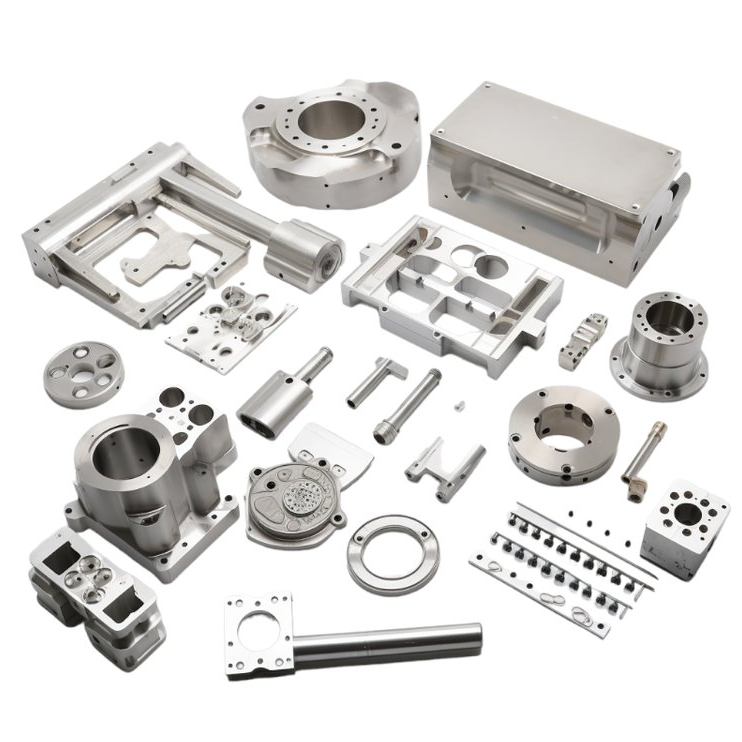
In today’s fast-evolving manufacturing landscape, precision and efficiency have become paramount. Companies across diverse sectors increasingly rely on advanced machining technologies to meet stringent quality standards, reduce production costs, and accelerate time-to-market. One such critical technology is CNC (Computer Numerical Control) machining, which has revolutionized how mechanical components are manufactured. The demand for CNC machining continues to rise as industries recognize its ability to produce complex and precise parts with exceptional consistency.
### Industries Driving the Demand for CNC Machining
Several industries are leading the surge in CNC machining requirements. These sectors depend heavily on precision mechanical parts that adhere to tight tolerances and exhibit superior performance under various operational conditions.
1. **Aerospace and Defense**
The aerospace sector demands components that can withstand extreme stress, temperature fluctuations, and rigorous safety standards. CNC machining provides the precision and repeatability necessary to fabricate parts like turbine blades, aircraft frame components, and engine parts. The ability to machine complex geometries with materials such as titanium and Inconel places CNC machining at the forefront of aerospace manufacturing.
2. **Automotive Industry**
Modern vehicles rely on lightweight, durable, and high-performance components. CNC machining enables the production of engine blocks, transmission systems, and suspension components with elevated accuracy and enhanced surface finishes. With increasing focus on electric and autonomous vehicles, CNC machining’s role is further amplified to produce innovative parts with precision.
3. **Medical Devices and Equipment**
In the medical field, precision is non-negotiable. CNC machining is used to manufacture surgical instruments, orthopedic implants, dental devices, and other critical components that demand biocompatibility and exact specifications. The capacity to work with medical-grade metals and plastics underscores CNC machining’s indispensable role in healthcare technology.
4. **Electronics and Telecommunications**
Miniaturization and the increasing complexity of electronic devices drive the need for highly precise mechanical components. CNC machining facilitates the production of connectors, housings, and heat dissipation parts that ensure performance and reliability in electronic devices and communication infrastructure.
5. **Energy Sector**
From oil and gas exploration to renewable energy installations, components such as valves, pumps, and turbine parts require robust manufacturing methods. CNC machining helps meet these demands by enabling customization, high-quality finishes, and durability in parts subjected to harsh environments.
### Advantages of CNC Machining for Modern Manufacturing
CNC machining offers numerous benefits that make it the preferred choice across industries:
- **High Precision and Consistency:** Automated control systems ensure parts are manufactured within exact specifications, reducing errors and waste.
- **Versatility:** CNC machines work with a broad range of materials, including metals, plastics, composites, and ceramics.
- **Complex Geometries:** Multi-axis CNC machining can produce intricate shapes and fine details unattainable with traditional manual machining.
- **Improved Efficiency:** Automation reduces setup times and increases production speed, yielding cost-effective solutions for both prototype and mass production runs.
- **Repeatability:** Once programmed, CNC machines replicate parts consistently, ensuring uniformity across large batches.
### Leading CNC Machining Service Providers and Their Capabilities
Among the CNC machining service providers responding to this growing demand are companies specializing in precision mechanical parts processing with an unwavering commitment to quality. These companies often hold certifications such as ISO9001:2015, reflecting their adherence to international quality management standards.
Their service portfolio typically includes:
- **5-Axis CNC Machining:** This advanced machining capability allows for the simultaneous movement of five different axes, enabling complex part geometries with fewer setups and higher accuracy.
- **CNC Milling and Turning:** Core machining processes that shape parts through material removal, essential for a wide range of applications.
- **Grinding:** Surface finishing processes that achieve desired surface smoothness and dimensional accuracy.
- **Heat Treatment:** Processes to alter material properties such as hardness and strength to meet specific application requirements.
- **Surface Treatment:** Techniques including anodizing, plating, and coating to enhance durability, corrosion resistance, and aesthetic appeal.
### Case Study: Elevating Precision Manufacturing with Advanced CNC Machining
Consider a manufacturing company specializing in high-precision mechanical components that recently integrated advanced CNC machining services into their production line. Equipped with 5-axis CNC machining centers and rigorous quality controls aligned with ISO9001:2015 standards, the company has significantly improved production accuracy and efficiency. Their ability to handle diverse materials and apply specialized treatments such as heat and surface treatments has allowed them to cater effectively to sectors like aerospace and medical devices.
This integration has yielded multiple benefits:
- Shortened product development cycles due to rapid prototyping and iterative design adjustments.
- Enhanced product reliability from tighter tolerances and superior surface finishes.
- Expanded market reach by meeting the compliance and quality demands of regulated industries.
### The Future of CNC Machining: Innovations and Trends
The CNC machining industry continues to evolve with technological advancements. Emerging trends include:
- **Smart Machining and Industry 4.0:** Integration of IoT sensors and data analytics enhances machine monitoring, predictive maintenance, and process optimization.
- **Additive and Hybrid Manufacturing:** Combining CNC machining with 3D printing techniques enables rapid production of complex parts with reduced material waste.
- **Sustainable Manufacturing:** Focus on energy-efficient machines and environmentally friendly materials aligns CNC machining with green manufacturing initiatives.
- **Automation and Robotics:** Increased use of robotic loading/unloading systems to improve throughput and reduce labor dependency.
### Conclusion
The expanding demand for CNC machining across critical industries underscores its pivotal role in modern manufacturing. Its unmatched precision, versatility, and efficiency make it essential for producing complex mechanical parts that meet today’s quality and regulatory standards. As companies continuously seek to improve product performance and production agility, CNC machining remains a cornerstone technology driving innovation and competitiveness.
With certified service providers offering comprehensive machining solutions—including 5-axis CNC machining, milling, turning, grinding, and specialized treatments—businesses can confidently tap into the capabilities needed to excel in their respective markets. As technology advances, CNC machining is poised to deliver even greater value, enabling industries to reach new frontiers of precision engineering and manufacturing excellence.