
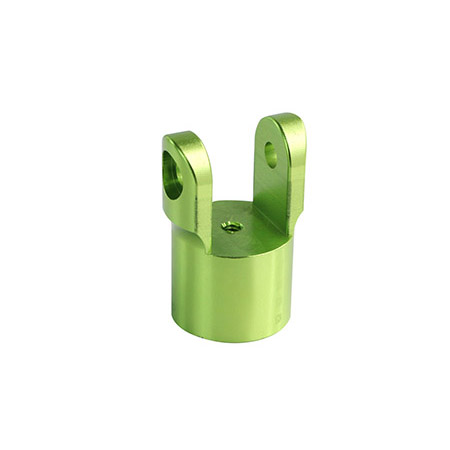
In today’s rapidly evolving manufacturing landscape, the demand for precision and efficiency has never been greater. Low volume machining has emerged as a pivotal solution for industries requiring high-quality mechanical parts with quick turnaround times and flexibility. This approach is particularly advantageous in prototyping, custom orders, and small batch production, where traditional mass production methods fall short.
One notable example in this sector is Dongguan K-Tek Machining Co., Ltd., a company that exemplifies the integration of advanced machining techniques with stringent quality standards. Specializing in the processing of precision mechanical parts, Dongguan K-Tek Machining has become a trusted name in the industry, accredited with the ISO9001:2015 quality management system certification, underscoring its commitment to excellence and reliability.
### What is Low Volume Machining?
Low volume machining refers to the production of mechanical components in smaller quantities, typically ranging from a few units to several hundred. Unlike mass production, which prioritizes economies of scale, low volume machining emphasizes precision, customization, and the ability to adapt to specific client requirements swiftly. This method suits industries such as aerospace, medical devices, automotive prototyping, and robotics, where exact specifications and quality are critical.
### The Role of Precision and Flexibility
The cornerstone of successful low volume machining lies in its ability to deliver highly accurate parts with minimal lead times. This is achieved through the use of state-of-the-art CNC (Computer Numerical Control) machining equipment, which allows for tight tolerances and complex geometries. Additionally, the process is highly flexible, enabling manufacturers to adjust designs quickly based on customer feedback or evolving product needs without incurring the high costs associated with retooling for mass production runs.
### Dongguan K-Tek Machining: A Leader in Precision Solutions
Situated in the manufacturing hub of Dongguan, China, Dongguan K-Tek Machining Co., Ltd. has carved out a niche in supplying precision mechanical parts tailored to diverse industrial applications. The company’s comprehensive machining capabilities include 5-axis CNC machining, CNC milling, CNC turning, as well as traditional milling, turning, and grinding services. This broad spectrum of services enables Dongguan K-Tek to handle complex projects with multiple operations, streamlining the production process and ensuring consistency across parts.
Moreover, the company goes beyond machining by offering critical secondary processes such as heat treatment and surface treatment. These additional steps are vital in enhancing the mechanical properties and durability of components, making them suitable for demanding operational environments.
### Commitment to Quality
Quality assurance is integral to Dongguan K-Tek Machining’s operations. Having successfully passed the ISO9001:2015 quality management system certification, the company demonstrates its adherence to international standards in every aspect of its manufacturing process. This certification assures clients that their parts are produced under strict quality controls, from initial design through final inspection.
By implementing rigorous quality management, the company reduces defect rates, improves repeatability, and fosters continuous improvement, all crucial factors in high-precision manufacturing. Customers benefit from reliable supply chains and parts that consistently meet or exceed their specifications.
### Industry Applications and Benefits
Low volume machining serves a range of industries that require precision components without committing to large-scale production. For instance:
- **Aerospace:** Complex aircraft components demand exacting standards and often involve small batch runs for testing or replacement parts.
- **Medical Devices:** Custom implants and surgical instruments require highly specialized manufacturing techniques.
- **Automotive Prototyping:** New vehicle models and components are developed through iterative prototyping, benefiting from low volume machining’s rapid and flexible production.
- **Robotics:** Small batches of intricate parts support the development of advanced robotic systems.
In all these sectors, the ability to produce accurate, high-quality parts on demand reduces inventory costs and accelerates innovation cycles.
### Future Outlook
As technology continues to advance, the capabilities and applications of low volume machining are expected to expand. Innovations in CNC technology, materials science, and quality control will enable manufacturers like Dongguan K-Tek Machining to push the boundaries of precision and speed further. Integration with digital manufacturing platforms and Industry 4.0 practices could also enhance production efficiency and traceability.
For clients, this means access to increasingly sophisticated mechanical parts tailored to their specific needs, delivered with reliability and speed. Low volume machining is poised to remain a cornerstone of precision manufacturing solutions, providing the agility and quality essential for modern industrial demands.
### Conclusion
Low volume machining stands out as a critical manufacturing approach that bridges the gap between prototyping and large-scale production. Organizations such as Dongguan K-Tek Machining Co., Ltd., with their comprehensive machining services and commitment to quality, exemplify how the industry is evolving to meet specialized client needs with precision and efficiency. Their range of advanced machining capabilities, combined with stringent quality controls, ensures that customers receive high-quality mechanical parts suitable for the most demanding applications. As manufacturing requirements continue to grow in complexity, low volume machining will undoubtedly play a key role in driving innovation and growth across multiple industries.