
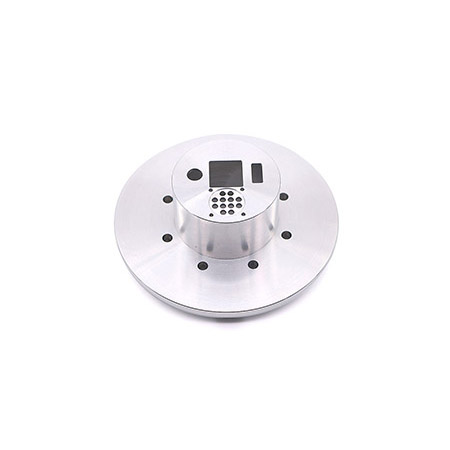
In recent years, the manufacturing sector has witnessed remarkable advancements due to the continuous evolution of CNC (Computer Numerical Control) machining technology. These advancements have significantly enhanced the precision, efficiency, and versatility of machining processes, enabling manufacturers to meet the ever-growing demands for high-quality mechanical components. This article explores the latest trends in CNC manufacturing technology, highlights its impact on the precision machining industry, and introduces a leading player making strides in this domain.
### The Evolution of CNC Manufacturing Technology
CNC machining technology has revolutionized the way mechanical parts are manufactured. By automating the control of machine tools through computer programming, CNC machining offers unparalleled accuracy and repeatability compared to traditional manual methods. Over the past decade, innovations such as 5-axis CNC machining, improved tool materials, advanced software integration, and refined process controls have elevated the capabilities of this technology.
5-axis CNC machining, in particular, allows for the cutting tool to move across five different axes simultaneously. This capability enables the production of complex geometries and intricate components with fewer setups, reducing both cycle times and the risk of errors. Enhanced software solutions facilitate real-time monitoring and adaptive control, ensuring optimal cutting parameters and minimizing tool wear.
These technological advancements have opened new possibilities across various industries, including aerospace, automotive, medical devices, electronics, and energy, where precision mechanical parts are critical.
### Impact on Precision Mechanical Parts Processing
The demand for precision mechanical parts has surged as products become more complex and performance standards grow stricter. High-precision components require tight tolerances, superior surface finishes, and consistent quality, which can only be achieved through advanced machining technologies.
Modern CNC machining ensures consistent production quality, reducing the margin of error and eliminating defects that might occur due to manual intervention. Furthermore, the integration of heat treatment and surface treatment processes within the manufacturing workflow enhances the mechanical properties and durability of the parts, preparing them to withstand extreme operational conditions.
Surface treatments such as anodizing, plating, or coating improve corrosion resistance and wear resistance, while heat treatment can modify the hardness and strength of metal components. Combining these processes with CNC machining creates a comprehensive manufacturing solution for high-demand applications.
### Company Spotlight: Precision Excellence in Mechanical Parts Processing
One noteworthy example of a company integrating these advancements is Dongguan K-Tek Machining Co., Ltd. The firm specializes in the processing of precision mechanical parts and has demonstrated a commitment to quality and technological excellence by obtaining ISO9001:2015 quality management system certification.
Dongguan K-Tek offers an extensive range of machining services, including 5-axis CNC machining, CNC milling, CNC turning, traditional milling and turning, grinding, as well as heat treatment and surface treatment. This breadth of capabilities enables the company to serve diverse client needs with customized solutions.
By leveraging 5-axis CNC machining, Dongguan K-Tek can produce highly complex parts with superior accuracy and efficiency. Their CNC milling and turning services accommodate medium to large batch production runs, ensuring consistent output quality and timely delivery. The addition of grinding services enables the finishing of surfaces to extremely fine tolerances and surface roughness specifications.
The integration of heat treatment and surface treatment operations highlights Dongguan K-Tek’s commitment to delivering fully finished parts that meet stringent industry standards. Through rigorous process control and a focus on continuous improvement, the company has positioned itself as a reliable partner in the precision manufacturing sector.
### Future Outlook: Embracing Smart Manufacturing
As manufacturing continues to evolve, smart manufacturing and Industry 4.0 principles are becoming increasingly influential. CNC machining centers equipped with IoT sensors, artificial intelligence algorithms, and real-time data analytics promise to further optimize machining processes.
Companies following this trend will benefit from predictive maintenance, enhanced process transparency, and adaptive scheduling, all of which lead to reduced downtime and increased productivity. Furthermore, additive manufacturing techniques integrated with CNC machining are expected to enable even more complex part geometries and material efficiency.
For industry players like Dongguan K-Tek, adopting smart manufacturing technologies will be a critical strategy to maintain competitiveness and meet the future demands of customers in high-tech sectors.
### Conclusion
The rapid advancements in CNC manufacturing technology are reshaping the precision machining industry by enabling manufacturers to produce complex, high-quality mechanical parts with greater efficiency and consistency. Companies specializing in precision mechanical parts processing, such as Dongguan K-Tek Machining Co., Ltd., exemplify how the integration of advanced CNC machining techniques, comprehensive heat treatment and surface treatment services, and quality management systems are driving industry excellence.
Looking ahead, the convergence of CNC machining with smart manufacturing will continue to unlock new possibilities, helping companies to innovate, optimize production, and meet the evolving requirements of a technology-driven global market.